
connect
Our team is here to help. Contact our office or schedule an appointment below to take your next step!
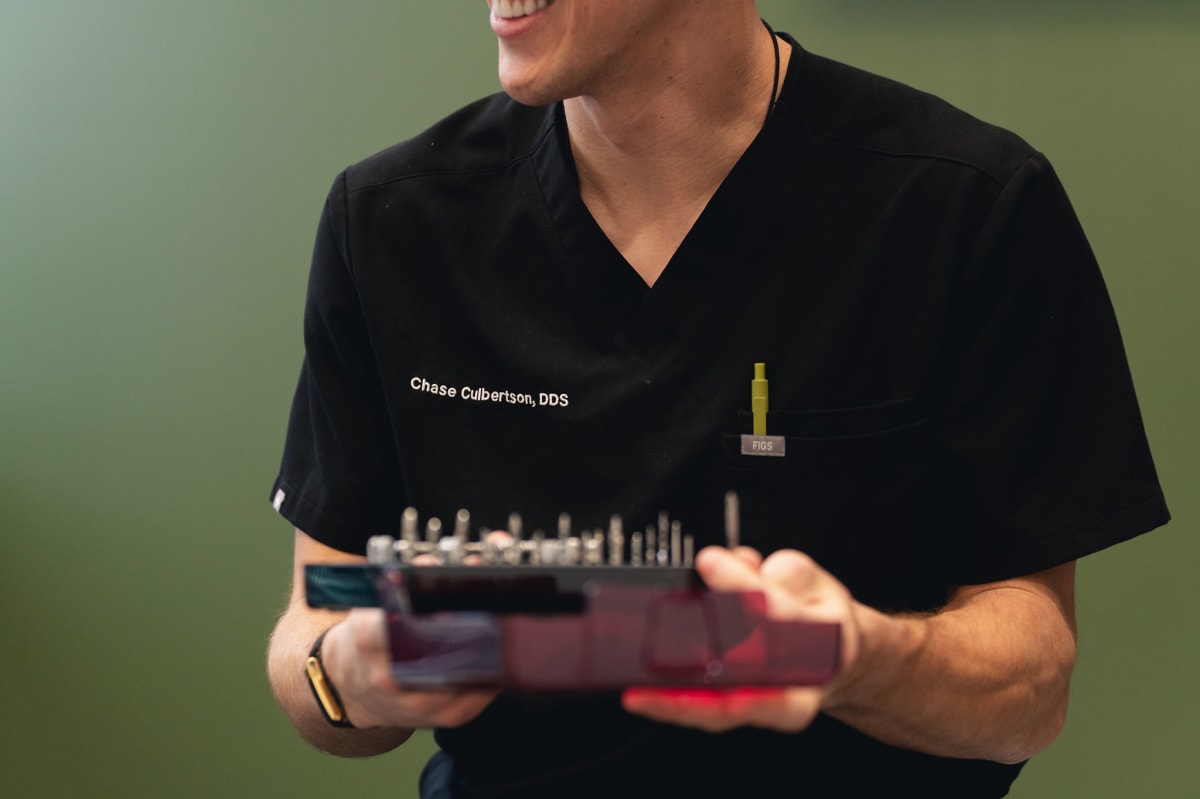

If you're missing most or all of the teeth in your upper or lower jaw, the question underneath every search you've made is probably the same one: can this actually be fixed, and can it be fixed for me?
For most people, yes. A full arch of teeth can be replaced with a fixed, implant-supported set that stays in your mouth, doesn't come out at night, and lets you eat what you want again. Even when you've been told somewhere else that it can't be done, there's often more to the story.
Dr. Chase and the team at Summit Dental Studio in Dayton, OH, built this guide for the researching stage. If you want the shorter path, reach out to the office whenever you're ready at (937) 977-1818.
Full arch replacement means restoring an entire row of teeth at once (upper, lower, or both) rather than fixing one tooth at a time. Once enough teeth are gone or failing, the whole row becomes the unit of treatment. Three broad families of solutions fit that description, and they behave very differently in your mouth.
A traditional denture rests on the gum tissue, comes out to be cleaned, and requires no surgery. It's the least invasive option and the most familiar one.
A small number of implants anchor the denture so it snaps on and off rather than floating on gum tissue. It still comes out for cleaning, but the stability improvement, especially on the lower jaw, is significant.
The bridge stays in. Chewing force travels into bone the way a natural root would, which helps the jaw hold its shape over time. This is the category that includes All-On-Four and TeethXpress.
Almost nobody loses a whole arch at once. It happens in stages, often over a decade or two, and understanding how you got here explains why certain treatment steps come before others.
The most common road to full-arch loss. Gum disease attacks the bone and attachment holding teeth in place silently, and most people don't realize how far it has progressed until several teeth are already mobile. Bone is already gone before a single tooth comes out, which shapes the implant plan later.
Deep decay can hollow out tooth after tooth: filling, then crown, then root canal, until there isn't enough healthy structure left to hold anything.
Old crowns and bridges don't last forever. When a bridge abutment fails, you lose the whole span. Recurrent decay, cracked roots, and failed root canals stack up until patching reaches the end of what it can do.
An accident can take out teeth immediately. Long-term grinding does it slowly, fracturing and wearing teeth down until restoration isn't realistic.
Lose one back tooth and the neighbors drift into the gap. Bite force shifts onto teeth that weren't built to carry it. The bone under the empty space shrinks. It's a cascade, and it's why "I'll deal with it later" so often turns into a full-arch conversation.
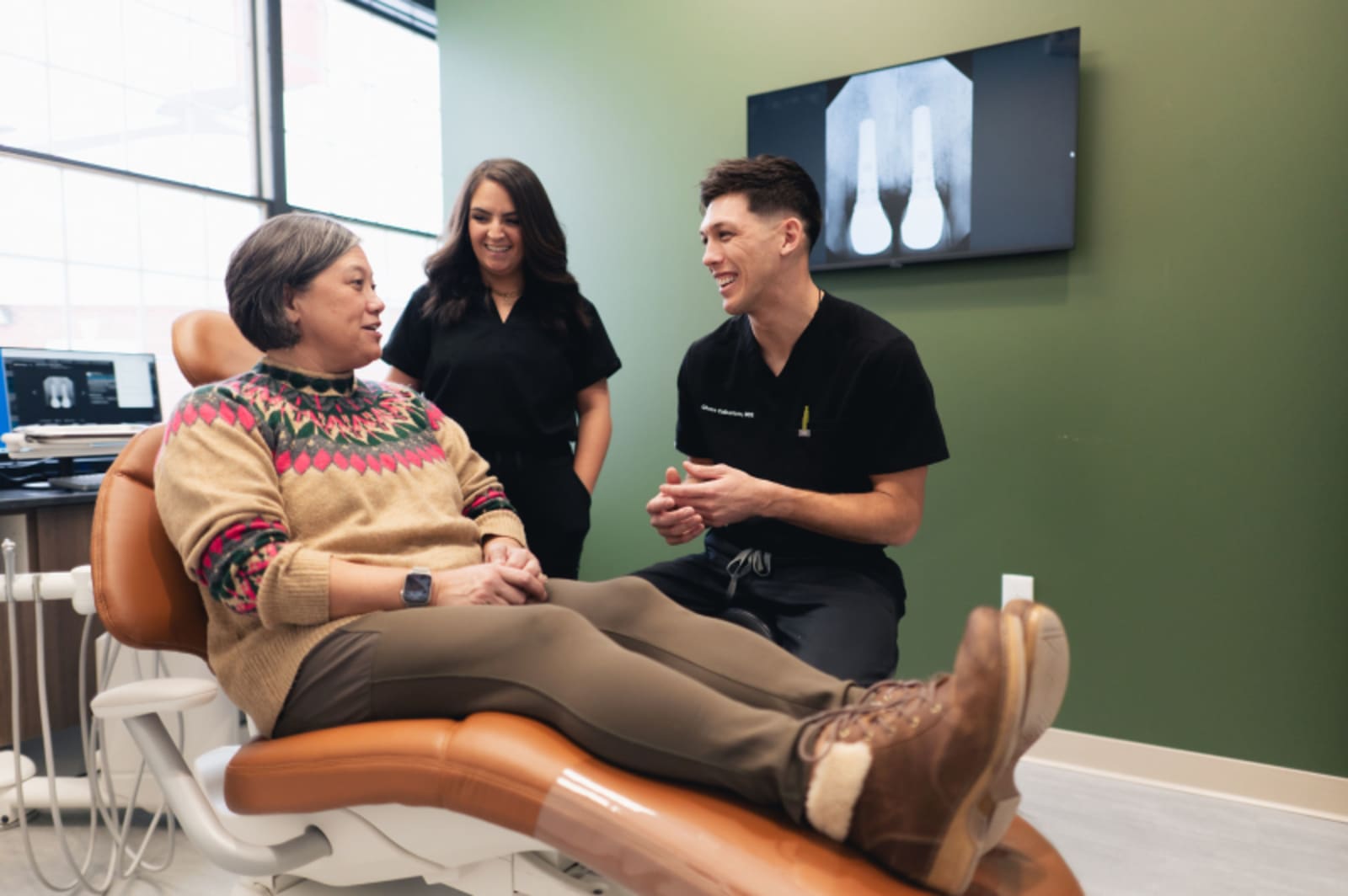
A real full arch plan is built from data, not a glance in the mirror.
The exam starts with the obvious: which teeth remain and what condition they're in, how healthy the gum tissue is, whether there's active infection, how your jaws come together, and how your lips and face frame your smile when you talk. The final teeth have to look right on your face, not just fit the bone.
Imaging fills in the picture. Pain-free digital x-rays show decay, infection, and existing dental work. Three-dimensional imaging shows the jaw as a volume: bone height and width, density, where the sinuses sit, and where the nerve runs.
That determines whether an implant can go in a given spot, how long it can be, and at what angle. From there, Dr. Chase plans the case digitally before surgery is scheduled, designing implant positions and the shape of the final teeth as the person who will both place them and deliver them. 3D printing is part of what makes same-day provisional teeth realistic in many cases.
You'll also be asked about your general health, medications, and habits, because those shape healing as much as anything in your mouth does.
Here's the full range, from no surgery to complex reconstruction, including the paths we'd steer most people away from.
Removable, no surgery, lowest upfront cost. The trade-offs are real: reduced bite force, movement while eating, adhesive, and relines as the ridge changes shape underneath.
Two to four implants anchor a denture that snaps on and off. Stability improves dramatically, especially on the lower jaw. You still remove it for cleaning.
Four implants per arch, with the back two angled to catch denser bone and avoid the sinus or nerve. That angling is what often makes grafting unnecessary, and it frequently allows a provisional set of teeth the same day.
Six or more implants spread the load across more anchor points, often chosen for heavy clenchers or when a longer, more rigid final bridge is planned.
Extractions, implant placement, and a fixed provisional bridge in one appointment. You've likely seen this advertised around Dayton. The difference here is that Dr. Chase plans the case, places the implants, and delivers the final restoration: one provider, start to finish.
When the upper jaw has lost too much bone for standard placement, pterygoid and zygomatic implants anchor into denser bone farther back in the facial skeleton. They're the reason some patients told "dentures are your only option" turn out to have a fixed path after all. It's a particular focus of Dr. Chase's training.
Multiple shorter bridge sections rather than one continuous arch. A problem in one section doesn't mean removing everything; repairs stay contained.
Most people are really choosing between three things. Here's how they stack up on the factors that change your daily life.
A fixed arch on four or six implants gives the strongest, most natural bite. Snap-in dentures are a step up from traditional dentures but still rest partly on gum tissue, so heavy chewing feels different.
Snap-ins need the fewest implants, All-on-4 sits in the middle, All-on-6 needs the most. More implants means more surgery and more cost, and when bone supports it, more redundancy if one ever has trouble.
Snap-in dentures come out, which makes cleaning straightforward. Fixed arches stay in, so you clean around and under the bridge with a water flosser and specialty floss, with a deeper clean at maintenance visits. Neither is hard; they're different habits.
Upper fixed arches typically leave the palate open, which most people say improves taste and speech compared to a full denture. Snap-in uppers may or may not cover the palate depending on the design.
The implants themselves are designed to last decades. What sits on top is the wear item: overdentures need periodic attachment replacements; fixed bridges may need repairs or prosthetic replacement over the years.
From lowest to highest: traditional dentures, snap-in overdentures, All-on-4, All-on-6, and cases requiring grafting or remote anchorage at the top. The gap between tiers is significant. Compare what you're getting for the difference, not just the number.
Never want to deal with removal or adhesive again? Fixed wins. Want the lowest investment with real improvement over a loose lower denture? Snap-ins deserve a serious look. Grinder with good bone who wants maximum load-sharing? More implants make sense. Been told your bone won't support implants? The bone loss section below explains why that's rarely the final word.
Most people who assume they've disqualified themselves haven't. The evaluation exists to find the path, not hand out a verdict.
Signs you're likely a straightforward candidate:
Situations that call for a closer look first:
Age alone is rarely the deciding factor. Healing capacity and overall health matter far more.
"Not enough bone" almost always means "not enough bone for the specific technique that provider uses." When a tooth is lost, the surrounding bone gradually shrinks away, and the longer teeth have been missing, the further that shrinkage goes. Bone loss in people researching full arch replacement is the norm, not the exception.
Graft material is a scaffold that holds space while your own cells build new bone around and through it. It adds healing time before implants can go in, but it genuinely expands what's possible.
In the upper back jaw, the sinus cavity often sits low over a thinned ridge. A sinus graft lifts the membrane and adds bone underneath, creating the height an implant needs. It's a routine, well-established procedure.
Sometimes the answer isn't adding bone: it's using what you have more intelligently. Angling implants, shifting them forward, or choosing dimensions that fit your anatomy can avoid grafting entirely.
When the upper jaw is too resorbed for standard placement even with angling, pterygoid implants anchor into dense bone at the back of the upper jaw, and zygomatic implants anchor into the cheekbone. These bypass the missing ridge bone entirely and can support a fixed arch in mouths previously considered denture-only. They take specialized surgical training, which is exactly why Dr. Chase pursued that training across North and South America.
Bone loss changes the plan. It rarely closes the door. The only way to know which path applies to you is a three-dimensional look at your own jaw.
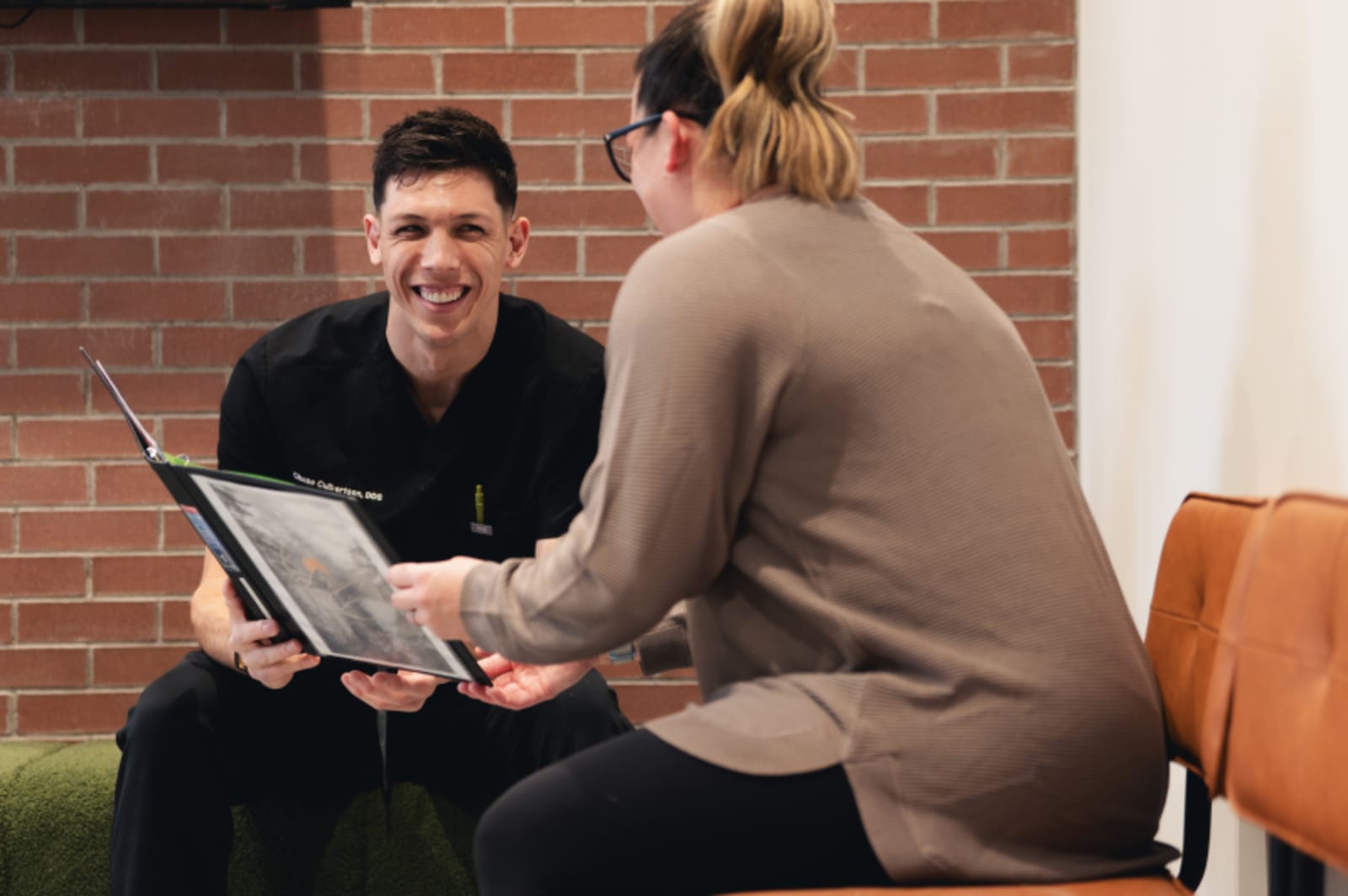
Every case differs, but the arc is consistent. Dr. Chase handles the treatment planning, the surgery, and the final restoration: the same provider from your first visit to your last.
The exam and imaging happen first, along with a real conversation about what you want. Nothing is committed to on this visit.
Your case is designed before surgery day. You see the plan and the cost before you decide anything.
Active infection gets treated. Grafting, if the plan calls for it, happens here or at the time of surgery.
Any remaining hopeless teeth come out, the sites are cleaned, and the implants are placed into the planned positions. It's a longer appointment than most dental visits.
Oral conscious sedation and IV sedation are both available. We'll talk through which fits your case during the planning conversation.
In many cases, a fixed provisional bridge goes on the implants the same day, so you leave with teeth. Whether that's possible depends on how firmly the implants seat in the bone, judged during surgery.
Over the following months, bone grows around the implant surfaces while you eat, work, and live normally with your provisionals in place. This waiting period is what makes the final result last.
Once integration is confirmed, the final arch is fitted and refined for bite, shade, and the way it sits with your lips and face. Ready to talk it through? Reach out to our Dayton office at (937) 977-1818.
Swelling peaks around day two or three, then eases. Stay on soft foods, skip straws and alcohol, keep your head elevated when you rest, take medications on schedule, and avoid strenuous activity for several days. Some bruising is normal, and it passes.
Energy returns, swelling fades, and most people are back to their normal routine well inside this window. You'll come in for a follow-up so we can check healing and adjust anything that needs it.
Bone is integrating with the implants beneath the surface. You won't feel it happening. Expect a handful of check-in visits. Your provisional teeth handle normal life fine: just avoid hard nuts, ice, and crusty bread.
You won't be without teeth. Provisionals look and function like teeth, shape the gum tissue, and protect the surgical sites while integration happens. If one ever chips or loosens, call us and we'll take care of it.
Dr. Chase places the final arch once integration is confirmed, stronger, refined in fit and appearance, and made to last. For people who've spent years avoiding photographs or ordering around a menu, this appointment tends to be an emotional one. That's what this whole process is working toward.
Implants don't get cavities. They can still be lost, and the reason is almost always the tissue around them rather than the implant itself.
For a fixed arch, a water flosser does most of the work, along with specialty floss and regular brushing. For a snap-in overdenture, remove it, clean the denture and attachments, and brush your gum tissue. Either way, it's a few minutes a day, and the single biggest factor in how long everything lasts.
Regular visits let us check the restoration, verify screws and fit, and clean the tissue around each implant. With a fixed arch, the bridge is periodically removed for a thorough cleaning underneath. These appointments catch small problems while they're still small.
The titanium in the bone is designed to last decades and often does. The teeth on top are the wear item: expect maintenance over the years and eventual replacement of the prosthesis. Be skeptical of anyone who promises a lifetime with zero upkeep.
Cost is often the first thing people search and the hardest thing to pin down, because the number depends entirely on your mouth. Here's what drives it.
Two quotes for "All-on-4" can differ enormously because they cover different things. One may include extractions, sedation, provisionals, the final arch, and follow-up care. Another may quote surgery alone. Ask what's included, whether the final restoration is in the number, and what maintenance costs later. A lower headline figure that excludes half the treatment isn't a lower price.
Most dental plans were written around fillings and cleanings, not full arch reconstruction. Many contribute something toward extractions or a denture-level benefit, but annual caps fall well short of this treatment, and implant coverage varies widely. Bring your insurance card to the consultation and we'll look at what your plan actually does.
Almost nobody writes one check. We'll walk through payment options and how costs break across each phase, with every step handled here. If you have no insurance or credit concerns, say so early, knowing your real constraints lets us find an approach that fits.
Anyone with a dental license can place an implant. Full arch reconstruction is a different level of work, and the difference shows up in the details.
Questions worth asking any provider you're considering:
Anyone doing this work regularly answers these without hesitation.
At Summit Dental Studio: 3D imaging and digital planning before surgery day, in-house same-day teeth, surgical training deep enough to handle severe bone loss, and Dr. Chase as surgeon, treatment planner, and restoring dentist.
Nothing falls into the gap between offices. He built his career around full mouth reconstruction from the year he graduated, and he keeps chasing that training rather than settling into what he already knows.
Full arch work rarely happens in isolation. Getting the sequencing right protects both the result and whatever you've already invested.
If periodontal disease is what cost you your teeth, placing implants into an untreated environment invites the same problem back. The tissue has to be healthy before anything goes in.
Sometimes the right plan isn't a full arch at all. A tooth with a good root might be worth keeping. Existing implants from a previous provider can often be worked into a new plan rather than removed.
Rebuilding an arch means rebuilding your bite. Jaw pain, clicking, or a grinding history all factor into where the new teeth get built. If the opposing arch has crowded or tipped teeth, clear aligners before restorative work can produce a far better final result, though it adds time.
Full arch teeth are designed, not just installed. Shape, shade, midline, how much shows when you smile: all of it gets planned. If you're keeping natural teeth in the opposing arch, whitening or veneer work may factor in so everything matches.
Complex cases run in phases. You should always know what phase you're in, what comes next, and roughly when.
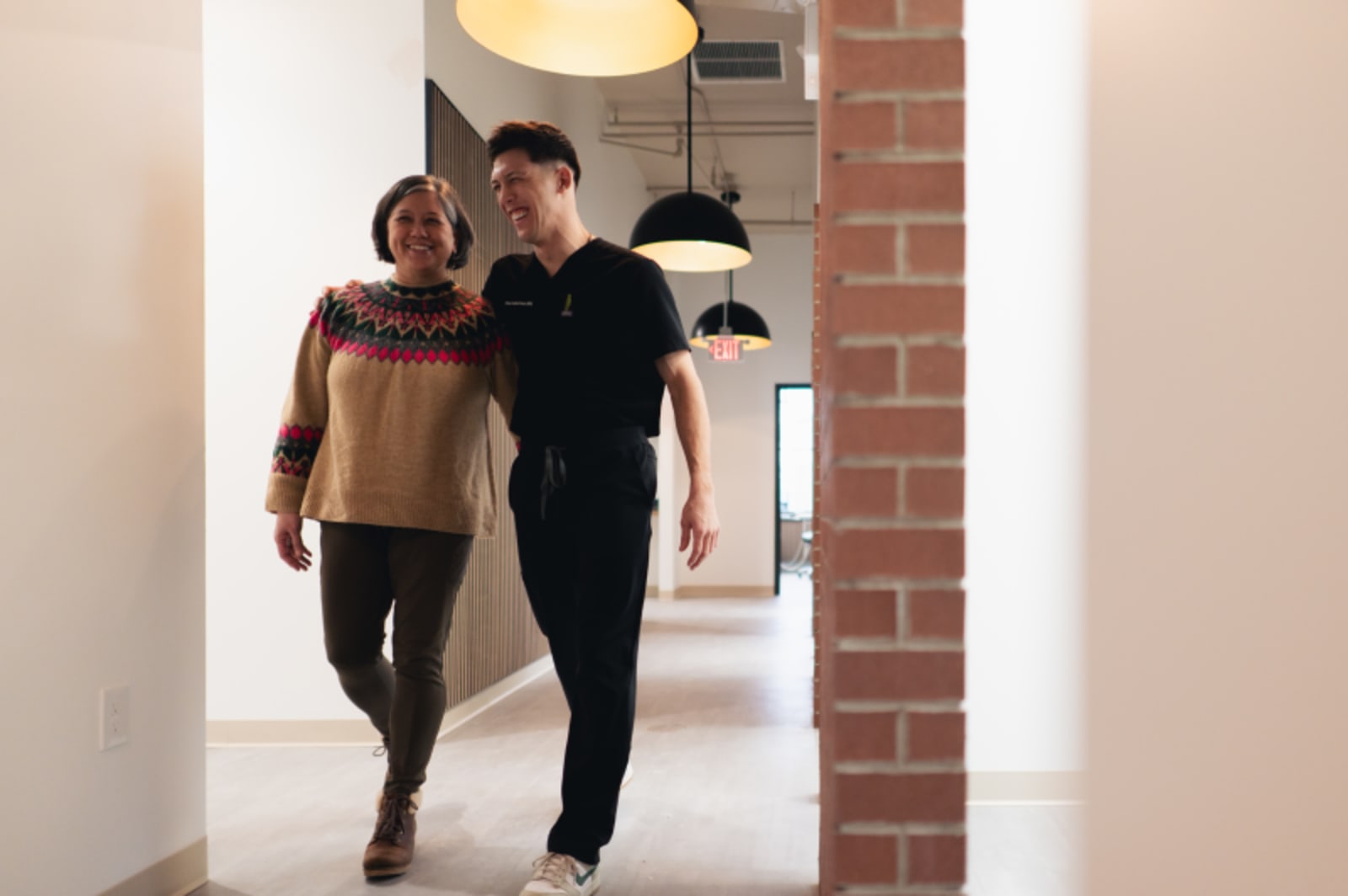
Your first visit is a conversation. Nothing gets decided that day except what's actually going on in your mouth and what your options are.
What to bring:
What happens while you're here:
You'll leave knowing what's happening in your mouth, what can be done, roughly what it costs, and how long it takes. Dr. Chase plans the case, places the implants, and delivers the final restoration, the same person, start to finish. If you've been told your case was beyond fixing, bring that with you. Some of our patients heard the same thing and now have a smile they built with us.
We're at 8051 Washington Village Dr, Unit B in Dayton, OH. You'll leave with a plan and a number, whether or not you book anything. When you're ready, call Dr. Chase and the team at (937) 977-1818.
Our team is here to help. Contact our office or schedule an appointment below to take your next step!