
connect
Our team is here to help. Contact our office or schedule an appointment below to take your next step!
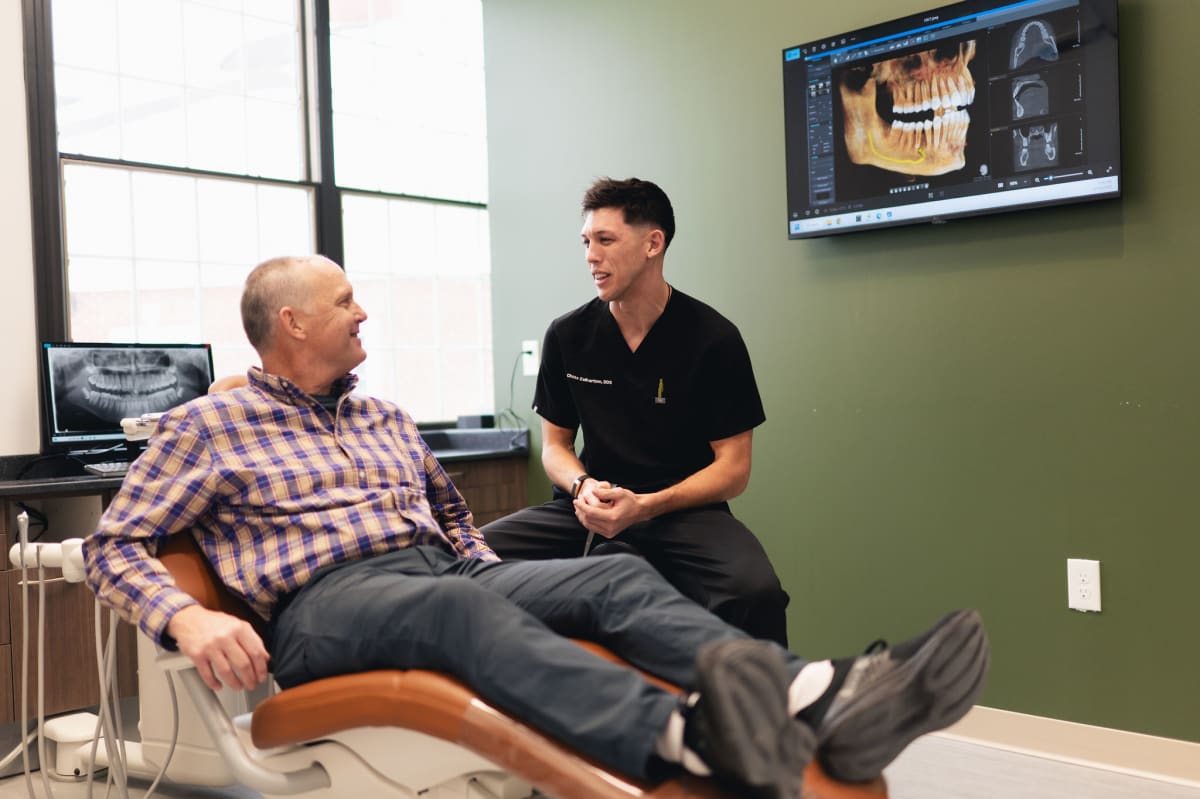

If you've quietly reached the conclusion that your mouth needs to be rebuilt, the question underneath everything else is usually the same: is my situation actually fixable? The answer, in almost every case, is yes.
Even a mouth with widespread decay, failing dental work, missing teeth, or serious bone loss can be restored through a coordinated plan that treats your whole mouth as one connected system.
Dr. Chase Culbertson built Summit Dental Studio in Dayton around exactly this kind of care. He serves as your surgeon, your treatment planner, and your restoring dentist, so your care stays with one doctor from the first appointment through the final result.
Patients who've been told their smiles are beyond saving come to him for a second opinion, and many leave with a clear path forward. If you'd rather just talk it through, call us at (937) 977-1818.
Full mouth rehabilitation is a coordinated plan that brings together whatever combination of treatments your mouth needs, in a deliberate order, to restore health, function, and appearance across the upper arch, the lower arch, or both. It's different from a cosmetic smile makeover, which starts with how your teeth look. Rehabilitation starts with what your mouth has to do every day: chew comfortably, speak clearly, and hold a stable bite.
It starts small. The steak stops making the cut, corn on the cob is out, and everything else gets cut into smaller pieces in the hope that nobody notices. After a while, your eating has quietly reorganized itself around what your mouth can handle, and most of the time you do it without even thinking about it anymore.
Underneath all of it there's often a low ache, or a sensitivity that flares up and fades without warning. Most people are surprised to learn how much of their daily life has been quietly shaped by a mouth that isn't working the way it should.
Almost nobody arrives at a full mouth case from one cause. Usually it's two or three things compounding over a couple of decades, and understanding which ones are driving your situation matters because a plan that rebuilds teeth without addressing the cause is a plan that fails twice.
Cavities get filled, then the fillings get bigger, until the tooth is more filling than tooth. Gum disease works quietly underneath the surface, attacking the bone and tissue that hold teeth in place, so teeth can look fine while they're already loosening. Both problems tend to accelerate when checkups are skipped for a few years, and both have to be fully addressed before any permanent restoration can go on top.
Years of nighttime grinding flattens and chips teeth and gradually collapses the height of your bite, which changes how your jaw sits and often brings jaw pain along with it. Accidents can fracture roots below the gumline in ways that don't cause obvious problems for years. Bone loss after teeth are gone
Jawbone needs the stimulation of tooth roots to hold its volume, so once a tooth is gone, the bone in that spot begins to shrink. That's why dentures that fit well years ago gradually loosen over time.
Most people can feel the tipping point before anyone names it for them. A few honest signals worth paying attention to:
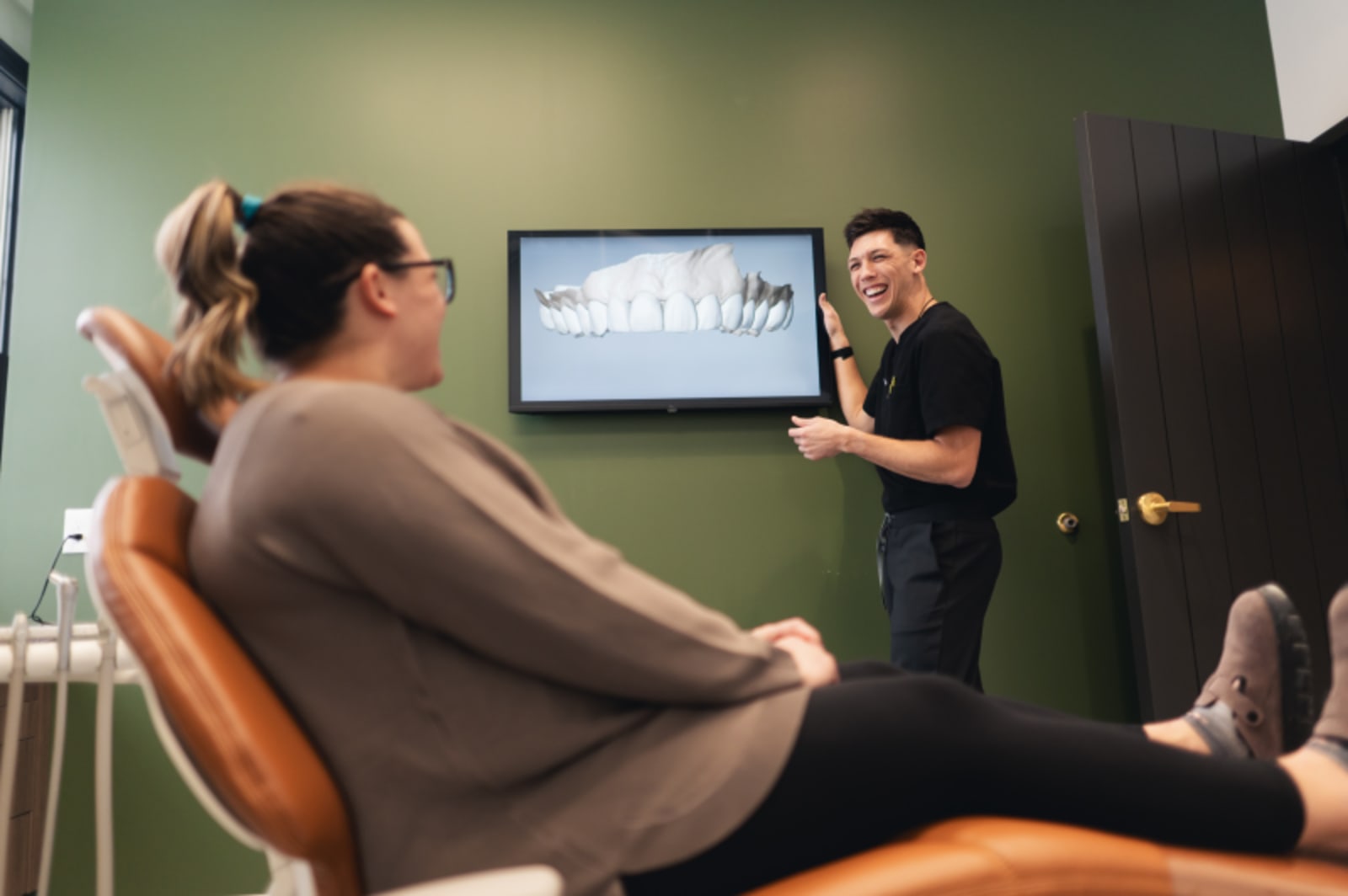
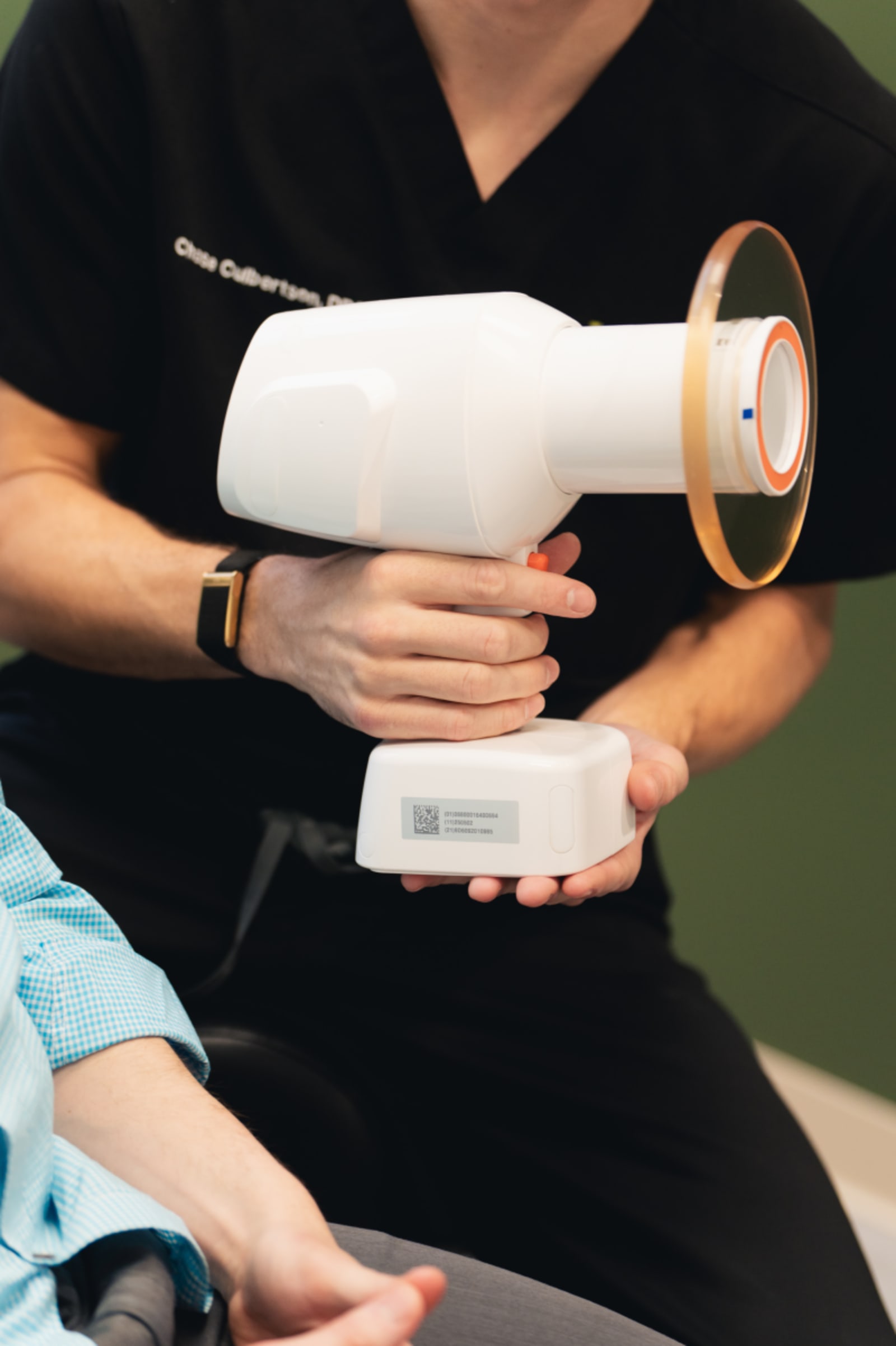
A rebuild plan is only as good as the information behind it, and a thorough evaluation takes real time. It should feel like a conversation, not a sales appointment. Hassle-free digital X-rays and three-dimensional scanning map your bone levels, root condition, nerve positions, and anything hiding under existing dental work, giving
Dr. Chase the detail needed to plan precisely rather than estimate.
From there, the evaluation looks at how your upper and lower teeth meet, because a collapsed or unstable bite has to be corrected as part of the reconstruction itself. Gum tissue and bone health get checked as well, since permanent restorations can only be placed once the foundation underneath them is stable and healthy.
An intraoral camera lets you see exactly what we see, displayed on a screen so nothing's a mystery. And the goals conversation matters just as much as the clinical findings: what bothers you most, what you want to be able to eat, and whether your priority is speed, conservation, or longevity.
Most full mouth plans combine several of these treatments, and all of it is coordinated here in Dayton from the first appointment through the final restoration.
When a tooth is worth saving, a crown restores its shape and strength, and same-day crown technology means Dr. Chase can scan, design, and deliver a finished restoration in a single visit. Root canal treatment saves a tooth whose nerve has become infected.
Extraction is the right call when a tooth is too broken down to serve as a reliable foundation, and deciding which teeth are worth keeping versus which ones are holding the rest of the plan back is one of the most important judgment calls in a full mouth case.
A bridge fills a gap by placing crowns on the teeth on either side and suspending a false tooth between them. A full denture is a removable set of teeth that rests on the gums and covers an entire arch. It's the most financially accessible option and restores your appearance right away, though dentures tend to lose their fit over time as the jawbone gradually shrinks without tooth roots to stimulate it.
An implant-supported denture attaches to a small number of implants placed in the jaw, giving it a stable base so it doesn't shift while you eat or speak. A fixed full-arch restoration goes a step further: it's a complete set of teeth permanently secured to implants that stays in place around the clock, just like natural teeth. The next section covers how these two options compare in more detail.
Periodontal therapy, gum grafting, and gum contouring address the tissue that frames your teeth. Healthy, well-shaped gum tissue is what gives a restored smile a natural appearance, and if jaw pain or bite problems are part of what you're dealing with, those get worked into the plan as well rather than left for later.
Two to four implants per arch hold attachments that let a denture click securely into place during the day, then you remove it at night for cleaning. It costs less than a fixed arch, requires less bone volume, and adds real stability over a denture that simply rests on the gums, though it's still a removable appliance at the end of the day.
If you're missing several teeth but not an entire arch, replacing them individually or with a short implant-supported bridge is a good option. Each area stands on its own, so if one spot ever needs attention down the road, it can be addressed without disturbing the rest of your restored teeth.
Four implants per arch support a fixed bridge, with the two back implants angled to work with whatever bone is available, which often eliminates the need for grafting. Fewer implants means less surgery and lower cost, and in many cases a temporary set of fixed teeth can be placed the same day as surgery.
All-On-Six uses six implants to spread support more evenly across the arch, which is often a better fit for patients with stronger bite forces or significant grinding habits. It requires more available bone and carries a higher cost than All-On-Four, but those extra implants provide meaningful long-term protection for the restoration.
With this approach, implants are placed and a fixed temporary arch is attached all in a single visit, so you leave with teeth rather than waiting weeks. Careful planning beforehand, using 3D imaging and in-house 3D printing, allows the temporary arch to be ready before surgery even begins.
"You don't have enough bone for implants" is one of the most common things people hear before they come looking for a second opinion. Not enough bone in the usual place doesn't mean there are no options.
When bone volume is missing, graft material is placed in that area to hold the space while your own cells grow in and gradually remodel the site over several months, creating enough density to hold an implant securely where one couldn't be placed before.
In the upper back jaw, the sinus cavity often sits low, leaving too little bone height for an implant. A sinus lift gently raises the sinus membrane and adds graft material underneath it, creating the height needed. It's a routine procedure, and it's frequently the difference between being told no upper implants are possible and walking away with a full upper arch.
When a tooth is removed, the surrounding bone naturally begins to shrink in the months that follow. Placing graft material in the socket at the time of extraction slows that process considerably, and if implants are anywhere in your future plans, this small step can save you from needing a much larger procedure later.
For patients with severe bone loss, remote anchorage implants are often the answer, and this is where Dr. Chase's advanced training becomes especially relevant. Rather than relying on the bone ridge that's shrunk over time, these implants are placed into dense bone further back or higher up in the facial skeleton, in areas where volume remains even after years without teeth.
Pterygoid implants anchor into the back of the upper jaw, and zygomatic implants anchor into the cheekbone itself. Together, they can support a full upper arch for someone who was told that grafting would take years or simply wasn't possible.
Infection, active gum disease, and teeth that can't be saved get addressed first, so pain is resolved and the mouth is in a stable, healthy state before anything permanent is built on top of it.
If bone grafting or a sinus lift is needed, it happens here. Bone remodeling is a biological process that can't be rushed, so healing is measured in months.
Implants are placed and the surrounding bone gradually grows against them over several months to lock them securely in place. In many cases, a fixed temporary arch goes in the same day as surgery, so you're never left without teeth while you heal.
Once everything is stable, Dr. Chase designs and fits the final crowns, bridges, or arches, with close attention to how they look, how they feel when you bite, and how they'll hold up over time. Because he planned the case, placed the implants, and is finishing the restorations, the result reflects one consistent vision from start to finish.
A straightforward case can wrap up in a few months. A complex case involving grafting, implants, and staged healing usually runs 12 to 24 months. Phasing gives your body recovery time between major procedures and gives your budget natural checkpoints, so you're never faced with everything at once.
The first few days after surgery bring some swelling, light bruising, and soreness that peaks around day two or three and then gradually eases. Ice, prescribed medication, soft foods, and rest take care of most of it, and most people find the discomfort far more manageable than they expected. New teeth also feel a little unfamiliar at first, simply because your mouth needs time to adjust.
Speech typically normalizes within a week or two, and chewing confidence builds gradually as you work back up to a normal diet. If the bite feels even slightly off at any point, call us so we can make a quick adjustment rather than leaving you to push through it.
Keeping everything in good shape long term comes down to a few consistent habits. Implants don't decay the way natural teeth do, but the gum tissue and bone around them can lose support over time if they aren't kept clean, so brushing regularly and using a water flosser matters.
We'll also set a cleaning and checkup schedule based on your specific case, and at those visits we check screws, monitor the surrounding tissue, and catch any early signs of wear before they become something bigger.

The goal of full mouth rehabilitation isn't a dramatic before-and-after photo. It's a mouth that works reliably every day, one you don't have to think about or work around anymore. Most people who finish describe the same handful of changes: eating without mentally editing the menu first, speaking without self-consciousness, and a smile they're not hiding in conversation.
Implants are durable and can last decades with good care, though the crowns or arches attached to them may eventually need repair or replacement, which is worth planning for.
A rebuild also treats gum disease rather than curing it permanently, so routine general dentistry and periodontal care stay part of the picture long after the final restoration is placed. What tends to surprise people most is how much of the change shows up in how they carry themselves, not just in how their teeth look.
If you've been told your case is too complicated or too far gone, come see us anyway. Dr. Chase built Summit Dental Studio for exactly these cases. As your surgeon, treatment planner, and restoring dentist, he manages your care from the first consultation through the final restoration, so nothing gets lost and nothing gets handed off.
When you come in, bring a photo ID, your insurance card if you have one, and a list of current medications. Recent X-rays are helpful, and we can take new ones if you don't have them. You'll be seen on time, never rushed, and you'll leave with a clear picture of what your options actually are.
Come in as a patient, walk out as a friend. Call us at (937) 977-1818, schedule a visit, or stop by at 8051 Washington Village Dr, Unit B in Dayton. Kubo will probably be supervising.
Our team is here to help. Contact our office or schedule an appointment below to take your next step!
