
connect
Our team is here to help. Contact our office or schedule an appointment below to take your next step!

Maybe you've been working around it for a while. You skip the crusty bread. You take ibuprofen before a rough dinner. You laugh with your hand in front of your mouth because that just became the habit. Maybe people who resonate with those situations eventually have to sit down and realize, "I have a dental problem I need to fix."
If that sounds like you, there's a name for what you might need: full mouth reconstruction. It's a treatment approach that looks at several connected problems at the same time and addresses them together, in the right order, rather than patching one thing while the rest quietly gets worse. For a lot of people in Dayton who've been putting this off, that kind of clear plan is exactly what finally moves things forward.
You don't have to walk in already knowing your diagnosis. Almost nobody does. Just reach out and we'll figure out the rest together. Call us at (937) 977-1818 and we'll find a time that works for you.
Pain that sticks around long enough stops feeling like pain and starts feeling like your new normal. A dull ache behind your molars at the end of the day. A jaw that feels tight by mid-morning for no clear reason. Headaches that keep showing up. Teeth that flinch at anything cold. You mention it once, someone suggests ibuprofen, and eventually you stop bringing it up because it just becomes part of the background.
Sometimes the sign is impossible to miss. A tooth that cracked years ago and never got fixed. An old crown that finally gave out. A gap where a tooth was pulled with every intention of dealing with it later, and later just never came. These are the kinds of problems that tend to sit quietly in the background until they can't anymore.
What makes this complicated is that the damage doesn't stay put. Each problem creates the conditions for the next one, which is exactly why single-tooth fixes so often feel like a losing battle. Here's how that chain reaction typically unfolds, because understanding it makes a big difference in how you think about treatment:
That's why addressing only the most obvious tooth can feel like a losing battle. You handle the thing that's hurting the most, and the underlying pattern keeps running in the background. Full mouth reconstruction is designed to interrupt that cycle by looking at the whole bite together, planning what needs to happen and in what order, rather than reacting to one tooth at a time.
When a treatment plan for this kind of situation looks large, it's because the damage itself is large, and a plan that doesn't account for all of it won't hold the way it should. If you've come across advertising for quick implant solutions, this kind of comprehensive planning can feel like a lot by comparison. But it's an honest answer to what's actually happening in your mouth, not a shortcut that leaves the underlying pattern in place.
This one arrives gradually. The steak ordered medium-well so it's easier to chew. The salads you quietly stopped ordering. The way you shift food to one side of your mouth without even deciding to. For a lot of people living with broken or missing teeth, mealtimes stop feeling like meals and start feeling like logistics, and it's almost never the thing patients mention first.
Over time, the body starts to pay a price too. When teeth are broken, missing, or painful, people naturally shift chewing to whichever side of the mouth feels safer and start avoiding foods that require real effort to bite through.
The foods that get cut first tend to be the most nutritious ones: raw vegetables, fresh fruit, lean meat. What's left is softer and easier to manage, but usually less of what your body actually needs. That kind of limited diet quietly affects your energy and overall health in ways that are easy to overlook because the change happens so slowly.
When several teeth are involved, full mouth reconstruction is often what brings normal eating back, because it addresses the underlying damage rather than just making one tooth more comfortable. Working around food doesn't have to be just how things are.
There's a specific kind of tiredness that comes from managing how you look, and most people don't even realize they're doing it anymore. You turn away from cameras without thinking.
You laugh with your lips closed because that just became the habit. You catch yourself mid-sentence and bring your hand up to cover your mouth. It becomes second nature, and that's exactly what makes it easy to overlook as a real problem worth solving.
Wanting that to change isn't vanity. How you feel about your smile has a direct effect on how you show up in the world, whether that's in a job interview, a first meeting, or a conversation with someone you've just met.
When part of your energy is going toward managing what others might notice, that's energy you're not putting into the conversation itself. That's a real and meaningful problem, and it's not something to brush off as purely cosmetic.
Full mouth reconstruction is different from a single cosmetic procedure because it addresses both how your mouth functions and how it looks, and those two things get planned together from the start.
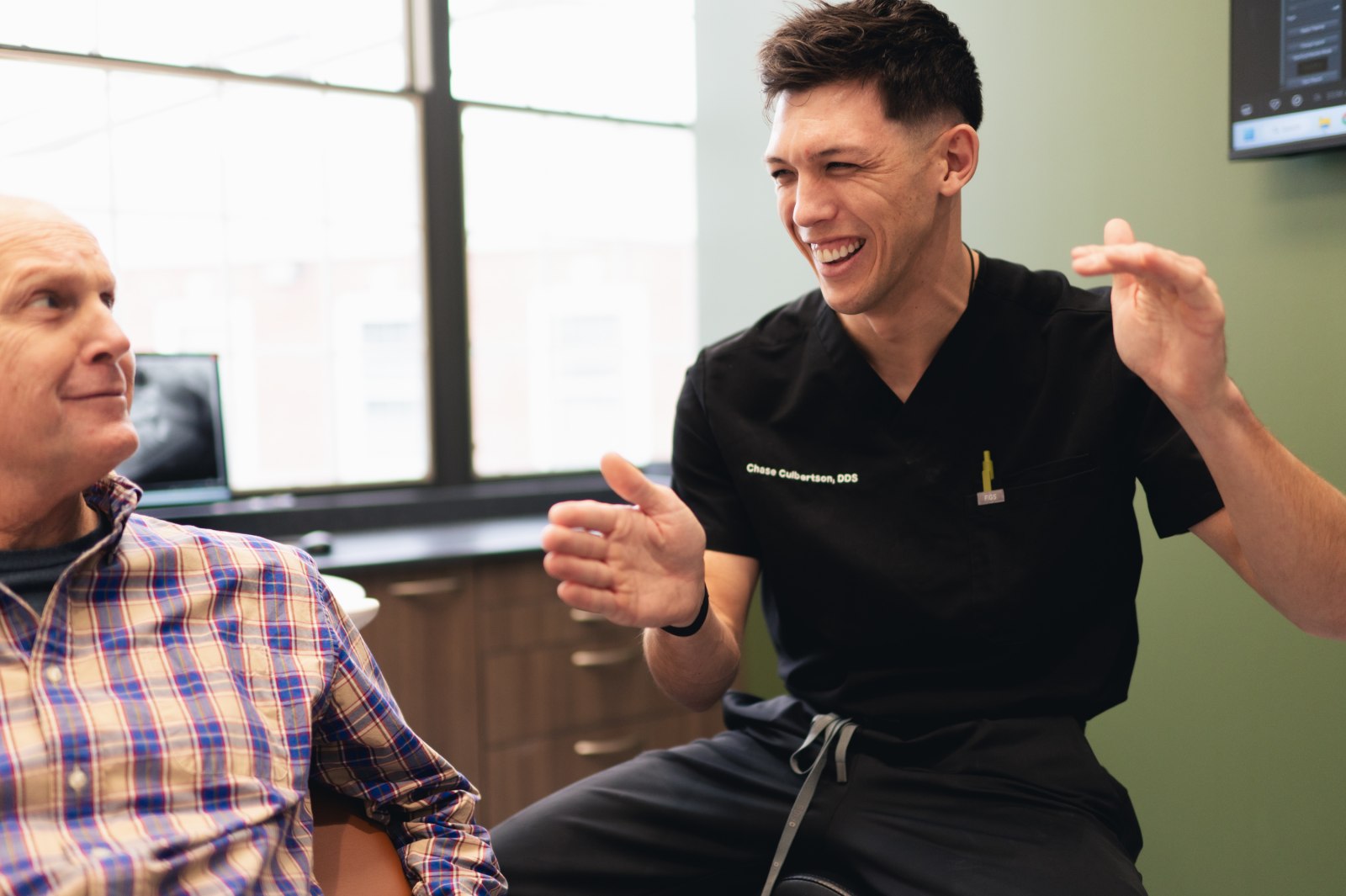
Dr. Chase pursued advanced training across North and South America to deliver results that are both clinically sound and genuinely beautiful.
Some people come to us carrying a sentence they've heard before: you don't have enough bone for implants, your case is too complex, or dentures are your only option. If that's you, please don't count yourself out yet, because advances in implant techniques have changed what's actually possible for patients who were told no.
Dr. Chase trained specifically in remote anchorage implants, which place implants into denser bone structures further back or higher in the face that tend to retain bone even when the front of the jaw has deteriorated. When the typical implant sites can't support a restoration, these alternative anchor points often can.
Bone and sinus grafting can build up areas where there isn't enough bone to work with, giving your own cells a scaffold to grow into and reinforce over time. And for patients who need a full row of teeth replaced, solutions like All-On-Four and TeethXpress restore an entire arch using just a small number of carefully positioned implants, so less bone is required than most people expect.
Sometimes a patient comes in asking about implants, and implants are exactly the right answer. Other times, the full picture tells a different story, and starting with one procedure while leaving other problems unaddressed means the result won't hold, because the underlying issues that caused the damage are still there.
Full mouth reconstruction is a coordinated plan built around what your mouth actually needs, with each step sequenced so that every piece of work supports the next. Depending on your situation, it might include:

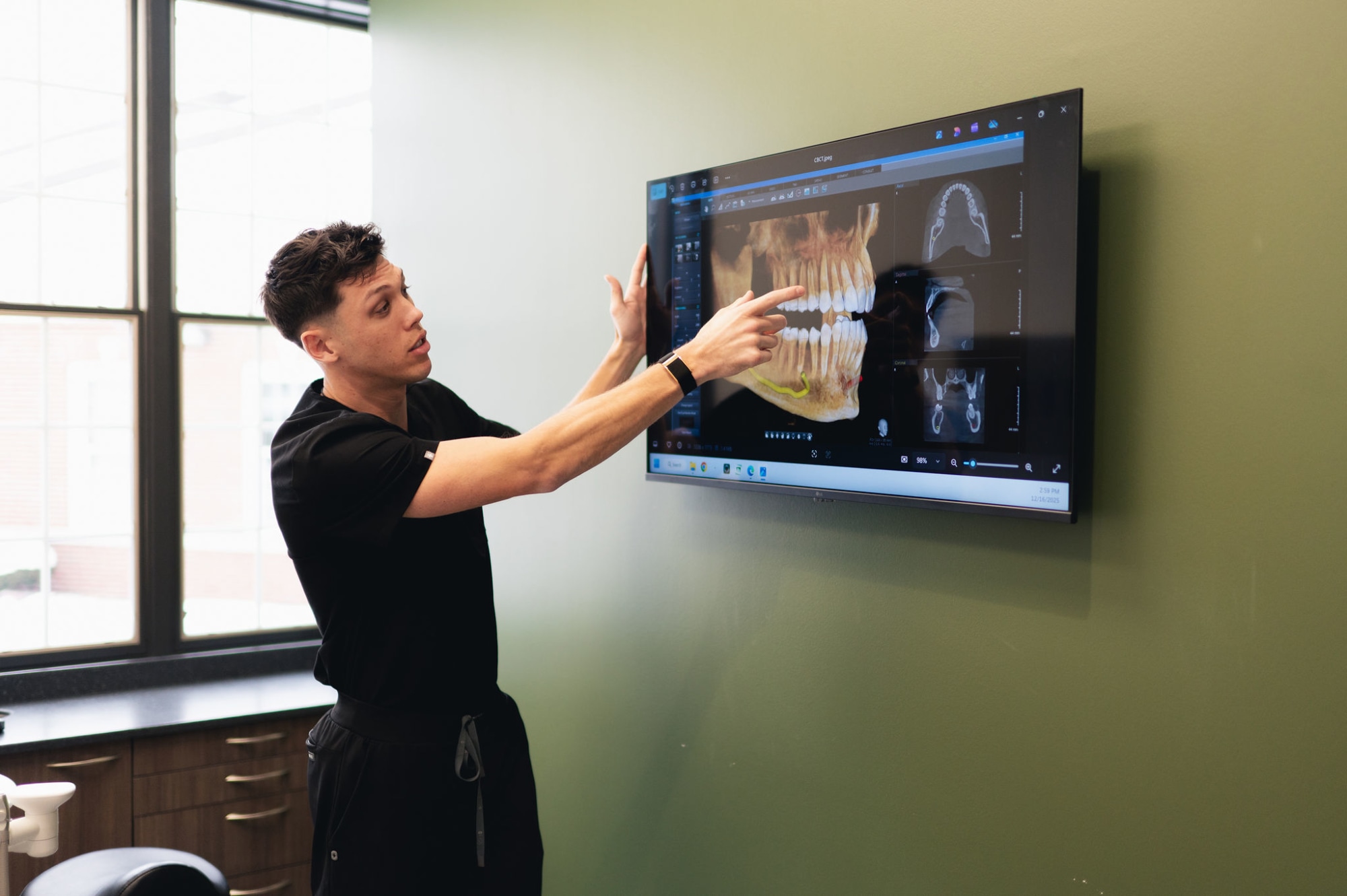
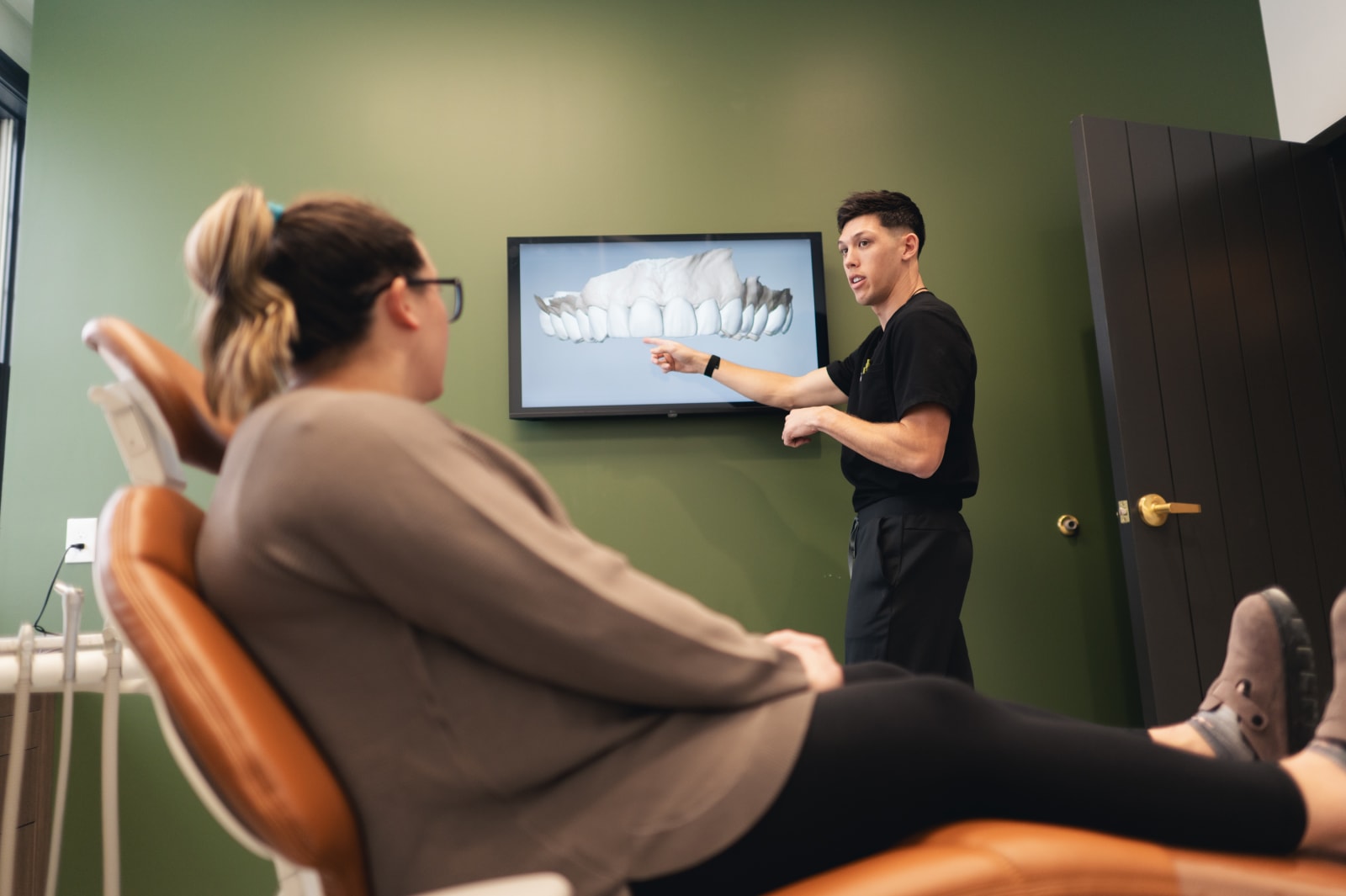
You'll be seen on time, by name, without any sense of hurry. Dr. Chase looks at how everything fits together, not just the tooth that's been bothering you most. He uses 3D imaging to see what's happening beneath the surface of your gums and bone, including how much bone is available to support implants, which a standard x-ray simply can't show.
An intraoral camera lets you see exactly what he's seeing in real time, so nothing he finds or recommends is a mystery.
Because he's the surgeon, the treatment planner, and the dentist who places your final restoration, the plan you build together at that first appointment carries all the way through to the end of your care.
We keep things simple here: a cozy space, an honest conversation, and a real plan built around what your mouth actually needs. If more than one of these signs sounded like your day-to-day, this is a good time to reach out before the pattern adds another chapter to what you've already been managing.
Call Summit Dental Studio at (937) 977-1818, or request a visit online and we'll find a time that works for you.
Our team is here to help. Contact our office or schedule an appointment below to take your next step!