
connect
Our team is here to help. Contact our office or schedule an appointment below to take your next step!
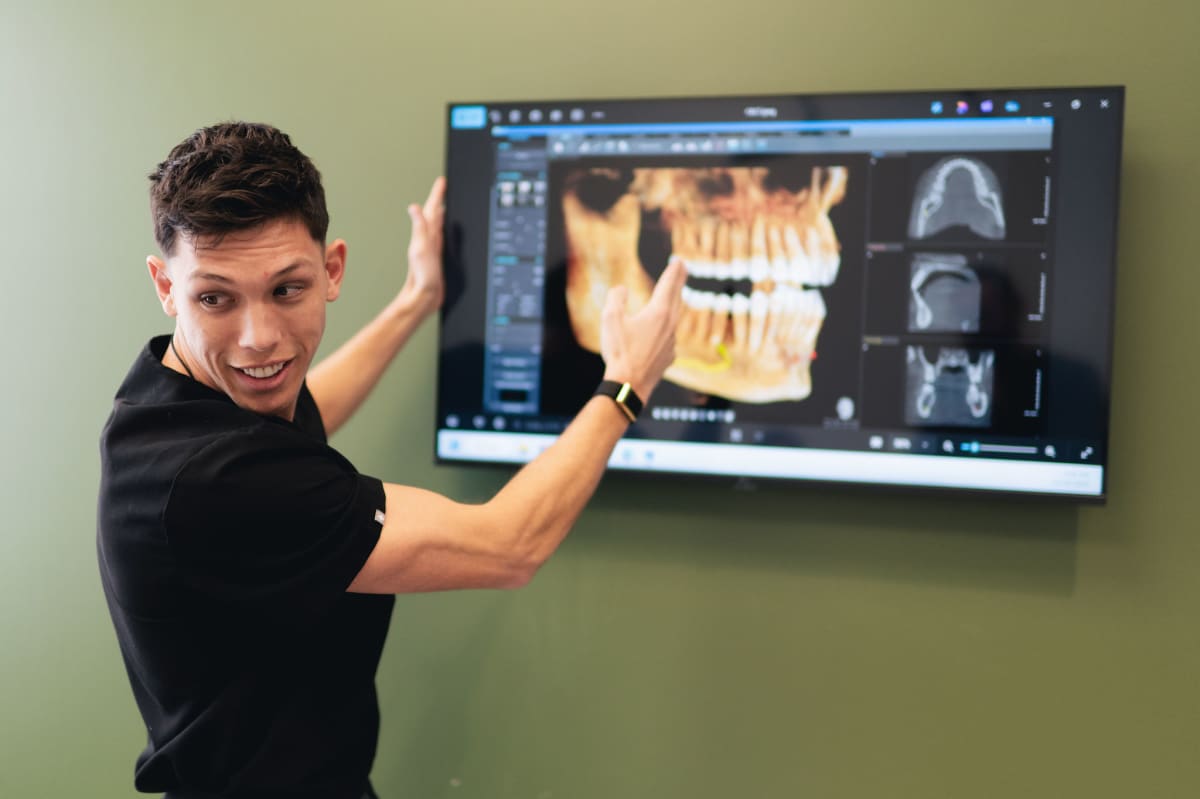

Keep the tooth. That's the whole point of a root canal. When bacteria get inside a tooth and cause an infection, a root canal clears it out so you can hold onto what you already have. Most root canals are done in a single visit, and the appointment is a lot more comfortable than people expect.
If the words "root canal" make you tense up, here's the thing worth remembering: the treatment is what ends the pain, not what causes it.
Here at Summit Dental Studio, we're proud to serve our own hometown of Dayton, OH. You'll be seen on time, never rushed, and never made to feel like just another appointment. If you're hurting right now, call us at (937) 977-1818 or request a visit online and let us know what's going on. If the tooth turns out to be too far gone to save, Dr. Chase will walk you through your options, including replacing it with an implant. He handles the full process right here at Summit Dental Studio, from start to finish, so you always know what comes next.
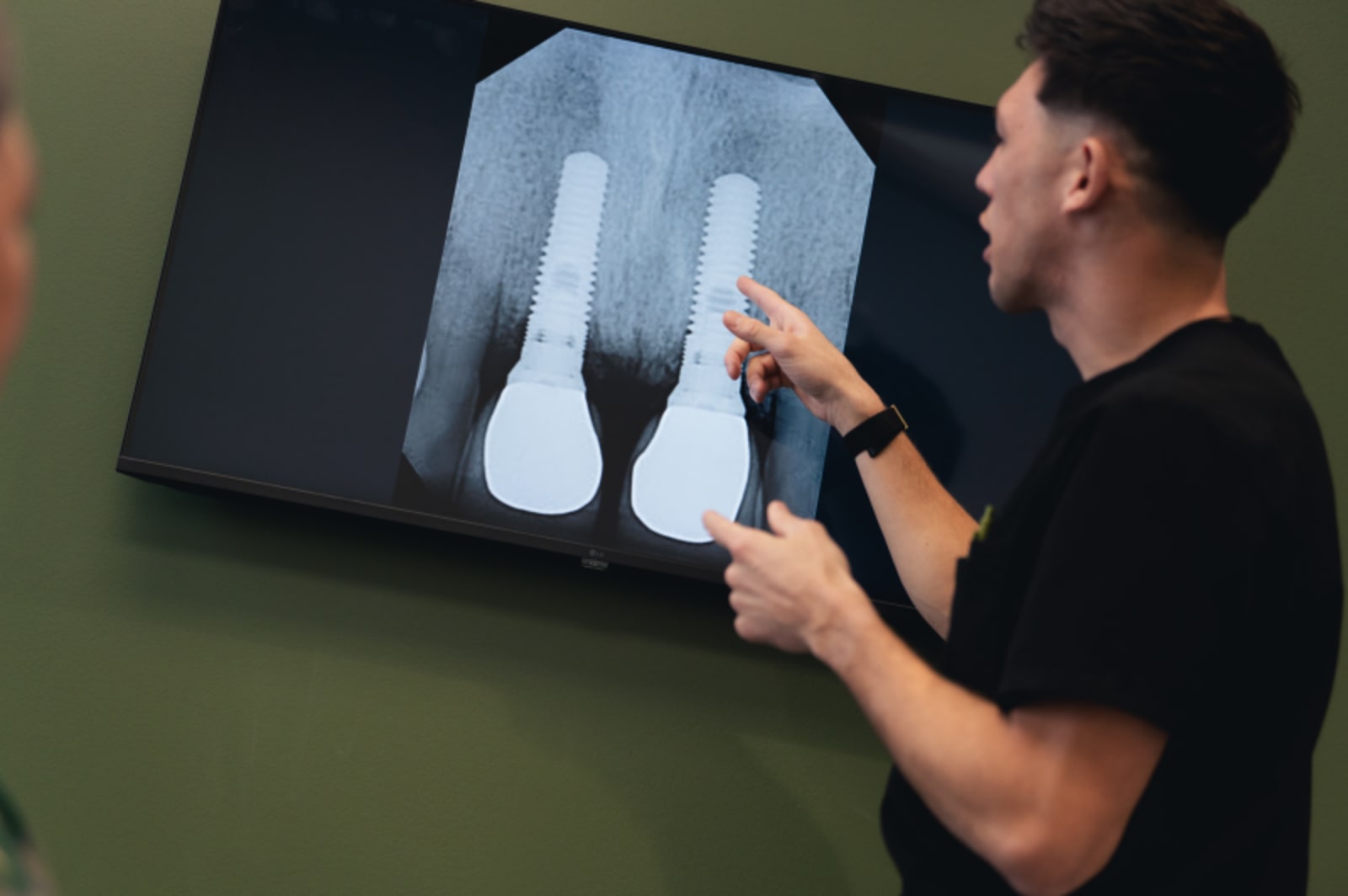
Every tooth has soft tissue living inside it. When decay, a crack, or an old injury lets bacteria reach that tissue, it gets infected, and an infection inside a tooth is what causes that deep, relentless ache. A root canal clears out the infection and seals the tooth back up. The outside of your tooth, the part you chew and smile with, stays exactly where it is.
Pain-free digital x-rays and an intraoral camera let us see what's going on and show it to you on screen. You'll understand exactly what we found before we touch anything. If the tooth isn't saveable, we'll walk you through dental implants and your other options.
Nothing else starts until you're numb and settled. This is the step most people are dreading, and it's the step we refuse to hurry. If you'd rather be sedated for the appointment, just ask. We'll make it work.
We remove the infected tissue and clean the inside of the tooth thoroughly. You may feel some pressure and a light vibration while we work. You should not feel pain. If anything is uncomfortable, raise your hand and we stop right away.
Once the canal is clean, we fill and seal it so bacteria cannot get back in. A temporary filling goes on top while we get ready for the final step.
A treated back tooth is more brittle than it looks, so most need a crown to hold up to real chewing. We mill same-day crowns right here in our office, so you are not stuck waiting weeks with a temporary.
Your symptoms are usually the clearest signal. A root canal is often the answer when you have:
Some teeth are too far gone to save, and we'll tell you plainly when that's the case. If the tooth is split through the root, the bone support is gone, or there's so little structure left that a crown has nothing to hold onto, pulling it is the right call.
From there, we'll walk you through what comes next: a single dental implant, an implant-supported full arch, or a bridge. Dr. Chase built this practice around full mouth reconstruction and complex implant work, so you're already sitting with the person who handles the treatment planning, the surgery, and the final restoration, all in one place.
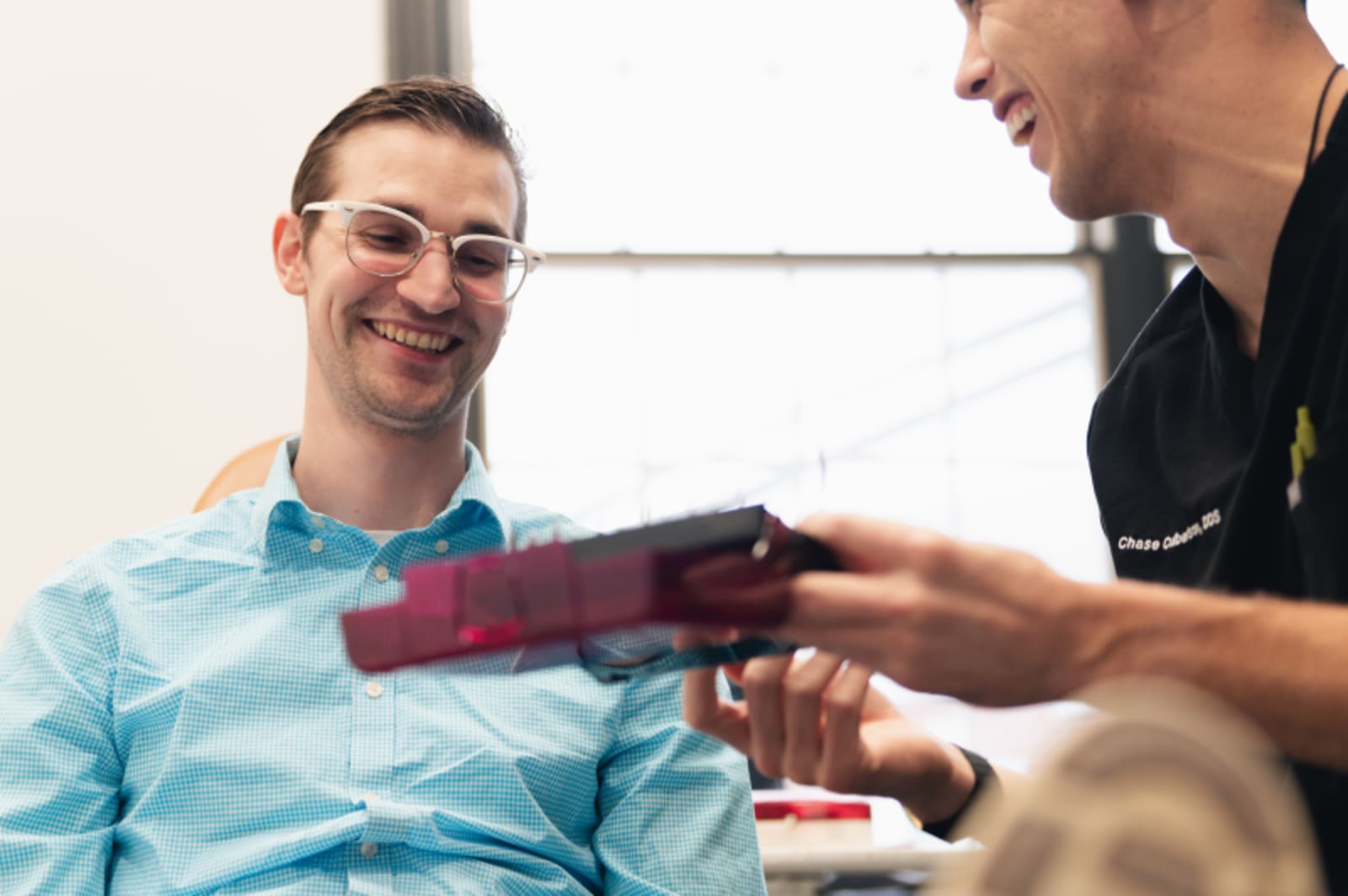
We'll take images, do a thorough exam, and walk you through exactly what we found before anything else happens. If you're already in pain and the tooth is ready to treat, we'll often go ahead and do the root canal that same day so you're not sent home still hurting.
Most root canals take about 60 to 90 minutes. Molars with several canals can take a little longer, and if yours looks like it will, we'll let you know before you sit down, not after.
Some mild soreness when you bite down is completely normal for a day or two. Most people are back to their regular routine the same day or the next morning.
After the root canal, you'll come back once more to place the permanent crown. It's a shorter, easier appointment, and once it's done, the tooth is fully restored.
That tooth just joins the rest of your smile at your regular checkups and cleanings. No special treatment needed, just the same care as every other tooth.
Preparing for your appointment is pretty straightforward. Eat something before you come in, since your mouth will be numb for a couple of hours afterward and you won't want to eat right away. Take your regular medications as you normally would, and just let us know what you're on. Bring your photo ID and insurance card. If you're thinking about sedation, give us a heads up when you book so we can set everything up and make sure you have a ride home.
Once you're home, a few simple habits will keep your recovery smooth:
If the pain gets worse instead of better, if you notice swelling, or if the temporary filling feels loose, give us a call at (937) 977-1818. Those are things we want to hear about right away, and you are never bothering us by reaching out.
What a root canal costs depends on the tooth and the situation, not on a single flat number. The main factors:
We'll go over your specific numbers with you before treatment starts, not at checkout. We accept many dental insurance plans, offer a variety of convenient payment options, and our team will help you understand what your benefits cover. If cost is the reason this tooth has waited, say so out loud. That's a solvable problem, and a much smaller one now than later.

Dr. Chase Culbertson, DDS, earned his Doctor of Dental Surgery degree from The Ohio State University College of Dentistry and has spent every year since pursuing the best training available in surgery, implantology, and full mouth reconstruction. Root canal treatment is well within that skill set, and so is whatever the tooth needs after.
Nothing gets handed off. Root canals, same day crowns, sedation if you want it, and if the tooth truly can't be saved, Dr. Chase places the implant and completes the final restoration here, with the same team and the same records.
The waiting room is small and quiet, and you'll be greeted by name. On time, never rushed, never too busy for your questions. Kubo, Dr. Chase's dog and best friend, may be supervising from somewhere nearby. Call us at (937) 977-1818 and we'll get you seen.
Most people are surprised by how manageable it is. We start by getting the area completely numb, then place a small shield over the tooth to keep things dry while we work. From there, you'll feel some pressure and a light vibration, but not pain. Your jaw might get a little tired from staying open, and if you need a break at any point, just raise a hand and we stop. If anxiety has been the thing holding you back, we offer sedation and we're happy to talk through that option with you.
Not necessarily. When the nerve inside a tooth dies, the pain often fades, but the infection doesn't go with it. It's still there and can keep spreading quietly. A tooth that hurt and then went silent is still worth having looked at sooner rather than later.
Usually, yes. Most root canals are finished in a single appointment. Occasionally a molar with extra canals, a tricky root shape, or a lot of active swelling will need two visits. When that's the case, we clean the tooth, place medication inside it, and let things settle before finishing up. We'll let you know ahead of time if we think yours is headed that direction, so there are no surprises.
When a tooth can be saved, saving it is almost always the better path. Your natural root holds its place in the bone, your bite stays balanced, and there's no gap to deal with down the road. Extraction is the right call when a tooth is cracked through the root or too damaged to restore, and we'll tell you plainly when that's the situation. If a tooth does need to come out, we'll walk you through your options for replacing it, including dental implants, and we handle that entire process here so you're never bounced between providers.
A treated tooth can last the rest of your life with the right care, but it's not indestructible. Heavy grinding, new decay at the edge of the crown, and skipped cleanings are the main things that shorten its lifespan. If you grind at night, ask us about a guard. Otherwise, keeping up with regular cleanings and brushing well around the crown goes a long way.
A tooth infection doesn't get better on its own. Over time it can spread into the surrounding bone and tissue, and a tooth that's easy to save today can become one that has to come out later. The sooner we take a look, the more options you have.
Picking up the phone is usually the hardest part. Once you're here, it gets easy. Someone who knows your name, a room built for comfort, and a plan explained in plain words before anything begins.
When you call, tell us what the tooth is doing and how long it's been doing it. If it's ready to treat that day, we'd rather finish the root canal while you're in the chair than send you home to wait. If the tooth turns out to be one we can't save, we'll walk through dental implants and your other options together.
Call us at (937) 977-1818 or request a visit.
Our team is here to help. Contact our office or schedule an appointment below to take your next step!